The Blood of Dawnwalker Forging Guide: How Upgrades Actually Work
There is no forging system in The Blood of Dawnwalker. Upgrade weapons and armor at a blacksmith or armourer for denarius: vendors, costs, day and night kit.
よくある質問
Is there forging or weapon crafting in The Blood of Dawnwalker?
Who can upgrade my weapons and armour?
How much does a weapon upgrade cost?
Do upgrades need materials, or do they advance the 30-day clock?
Is There Forging In The Blood of Dawnwalker?
No — and this page exists because almost every “forging guide” ranking for this game describes a system the game does not have. The Blood of Dawnwalker has no forge, no smelting, no mining nodes and no material chain behind your gear. As games.gg put it when the upgrade system was first documented, “There is no crafting table to hunt down or resource farming loop to grind through.”
What the game actually runs:
- Vendor upgrades — hand over Denarius (plural Denarii; the currency is not called anything else) to a smith or armourer, and the item’s quality tier goes up. No materials, no blueprints, no dismantle-for-parts loop.
- Consumable alchemy — the only real crafting: potions, pastes, balms and oils from water plus herbs or reagents, gated by a Recipe you find. That side is documented on /items/forging-materials-guide/; this page stays on the upgrade flow and where the vendors are.
So treat this as how to upgrade weapons and armour, which is the question the “forging” keyword is really asking.
How Do You Upgrade A Weapon Or Armour Piece?
The whole loop, as documented:
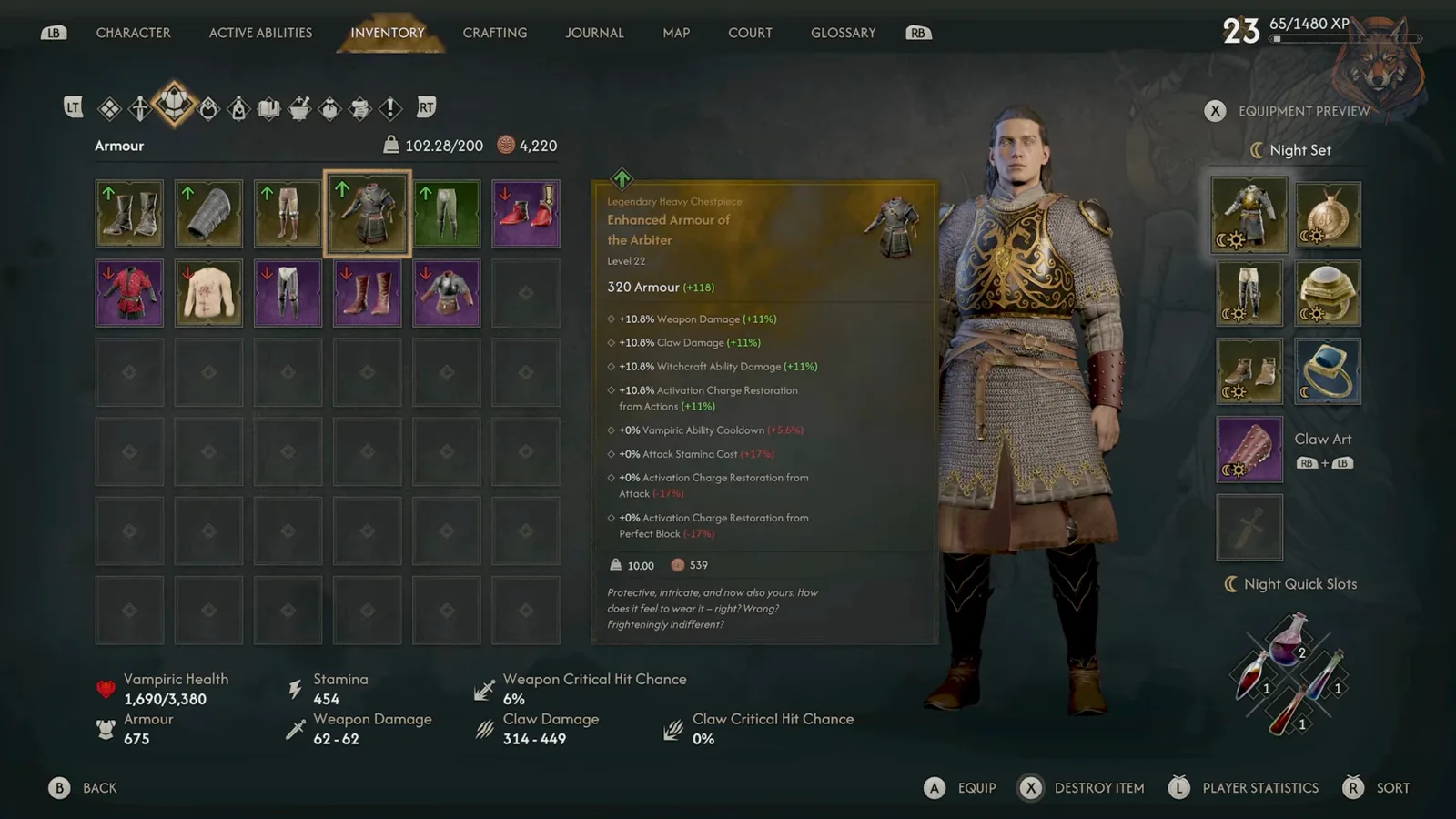
- Decide on a small number of pieces to carry. Because upgrades are bought, not farmed, an item you like can be pushed up the quality ladder — rare → epic → legendary — with money alone.
- Travel to the right vendor. Weapons and metal armour go to a blacksmith or an armourer. Which merchant handles cloth and leather pieces is not documented; what is documented is that no separate artisan tier has to be unlocked to get an item improved.
- Pay Denarius. The cost is a function of the item’s quality tier and Coen’s level. Nothing else is consumed.
- Re-check the card. Upgrades move the real axes — Armor, DPS, Damage against Mortals / Supernatural, Attack and Block Stamina Cost, Activation Charge Restoration, Max Human / Vampiric Health — rather than unlocking a new damage type. There is no holy, silver or elemental coating step to apply, because no such axis exists.
- Budget the trip, not the materials. Crossing the valley is the expensive part, since travel and other hourglass-marked actions eat into the /guides/30-day-time-system/ budget.
Who Upgrades Gear? Documented Vendors
| Vendor | Where | What is documented |
|---|---|---|
| Vera | Maragir Wealds | The upgrade contact for that region |
| The metal craftsworkers of Svartrau | Svartrau, the valley’s main settlement | Weapon and metal-armor upgrades; Svartrau is also the hub nearest the silver trade |
| Uriashi | Uriashi Hermitage, northwest in the Briar Sloughs | The hornless hermit blacksmith; also the smith who restores Saint Mihai’s sword in Forge It Anew, and the hub behind the Arbiter armour line |
Whether more smiths exist is not documented — the three above are the names carried by the audited sources as of patch 1.0.0. There is no “Ironmaster” character in the valley and no Foundry Quarter district to unlock.
What Does An Upgrade Cost In Denarius?
Direction only; no table. Every source that documents the upgrade system says the same two things: the price rises with item quality, and it rises with Coen’s level. Late-game upgrades on high-quality pieces run into the thousands of Denarius, and a legendary piece is the most expensive thing you will voluntarily buy.
The published per-step prices are not documented by official or wiki sources, and this page does not invent a 50 / 150 / 350 / 650 / 1,200 ladder to look complete. The one price any capture shows nearby is a purchase, not an upgrade: The Purge can be bought from the Silver Trader west of Svartrau, and the “roughly 3,500 denarius” figure quoted for it comes from a single video capture, so it too is not documented.
Is Forge It Anew A Forging System?
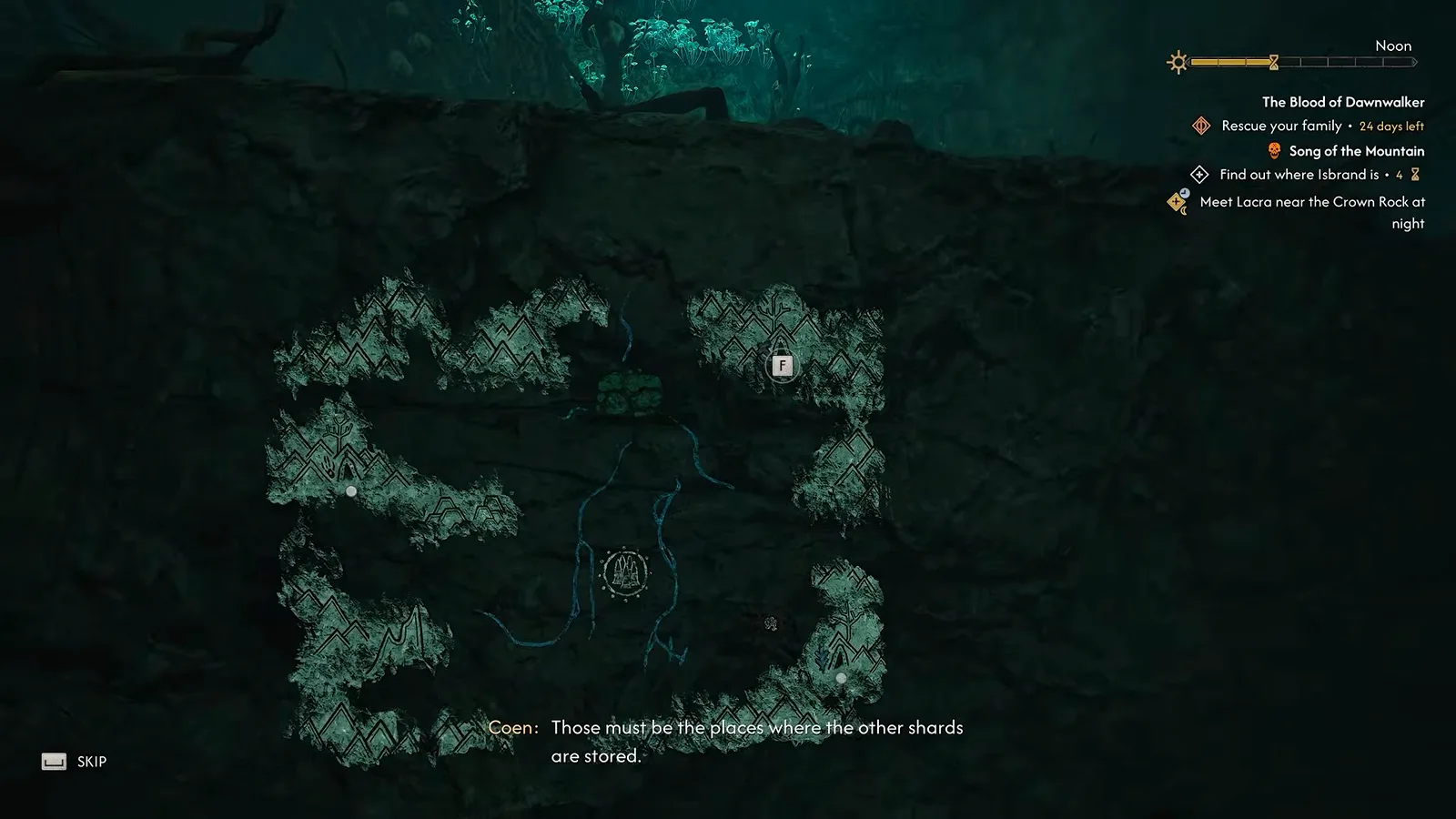
No, and the naming collision is probably where the confusion started. Forge It Anew is a quest: you recover St. Mihai’s sword broken (rare quality), Uriashi restores it to epic, you bring her three sword shards taken from Kobold nests, and the blade is then reforged and quenched at a curse sphere to reach legendary as the Imbued Sword of St. Mihai.
That is a scripted story chain with named quest stages, not a system you can use on your other gear — you cannot feed a sword to a forge to make a better sword. Shard locations, the cave-monster guard, and the riddle answers are on /items/legendary-weapons/.
Which Weapons Are Worth The Upgrade Money?
Fund the sword, because it is the weapon you can use in both forms; the night’s claws are a free form ability and no claw upgrade path is documented. The cross-verified names worth paying to scale, ranked on the tier list at /guides/weapon-tier-list/ and explained choice-by-choice at /guides/best-weapons/:
| Weapon | Where it comes from | Why fund it |
|---|---|---|
| Imbued Sword of St. Mihai | Forge It Anew reforge chain | Damage against Supernatural plus attack-stamina and dodge reductions; values not documented |
| Song of Valour | Boss reward from /bosses/ambrus/ | Level 21 Epic Shortsword — the mid-run piece most people actually upgrade |
| King’s Slayer | Buried treasure west of Svartrau | Block Stamina Cost reductions; the +45% perfect-block figure is single-capture, not documented |
| Gladius | Balaur cave, The Beast of Balaur | Damage against Mortals plus Max Vampiric Health |
| The Purge | Bakir’s camp, or the Silver Trader | Max Human Health plus stamina-cost reductions; card numbers not documented |
| Durandal | Collapsed bridge, western valley | Route name is single-source; role reported as low Attack Stamina Cost plus anti-supernatural damage |
Weaker-sourced names you may see mentioned — Volk’s Sword, Polished Long Cleaver — have no documented stats, so there is no basis for recommending spending upgrade money on them.
Does Day And Night Change What You Should Invest In?
Yes, and it is the main reason not to spread upgrade money thin:
- Day — human Coen: sword plus Witchcraft. Directional blocking is your offense, since a perfect block costs no stamina while a normal one drains the bar, and Perfect Riposte converts that into a guaranteed critical. Block Stamina Cost on both weapon and armour is the most valuable upgrade line you can buy for this half.
- Night — vampire Coen: claws. The sword only matters for abilities that require a real weapon, so Max Vampiric Health and Vampiric Ability Cooldown do more for you than raw card damage.
One well-upgraded sword plus armour that protects both forms beats two half-funded weapons. Build-level reasoning is on /guides/best-builds/ and the nodes behind it on /guides/skill-trees/.
Gear maxing is also trophy-relevant: the official list includes bringing the full Arbiter set to its unlocked potential and getting every slot to legendary quality, both of which are pure Denarius sinks — conditions are tracked on /guides/trophy-guide/ and the set itself on /items/emberforged-armor-set/.
What Did The Old Version Of This Page Claim?
This URL previously hosted a five-step material ladder with a named master blacksmith, ore veins and a deadline. None of it is in any source, and it is listed here so players can identify where the misinformation came from:
| Old claim | Reality as of patch 1.0.0 |
|---|---|
| Tier 1 → Tier 5 upgrades needing ingots, pelts, fangs, ore and a “Primordial Heart” | No materials. Vendor service bought with Denarius only |
| Meteorite Ore, Blood Essence, Silver Powder, Refined Steel Ingots as farming targets | None of these items exist; there are no mining nodes or drop tables |
| Ironmaster Goran in a Foundry Quarter, “master” tier smithing | The documented smiths are Vera, the Svartrau metal craftsworkers and Uriashi |
| Upgrades costing “1 Daylight Tick” each | Not documented as a time spend; only hourglass-marked actions consume segments |
| A “Dinar” price column | The currency is Denarius (plural Denarii) |
| “Act III siege closes the foundries on Day 24” | The game has no Act-structured foundry lockout; time pressure comes from the 30-day budget |
| Dismantling weapons for upgrade materials | No source documents dismantling at all |
| Silver-coating or holy-blade enchanting | Silver is banned contraband in the valley, not a weapon enhancement |
Sources & Verification
- games.gg — How to upgrade weapons and armor in The Blood of Dawnwalker — the vendor-plus-denarius model, quality and level price scaling, and the explicit absence of a crafting table or resource-farming loop.
- IGN Wiki — The Blood of Dawnwalker — Crafting (consumables from water, herbs, reagents and named Recipes), How to Sell Silver (the Silver Trader west of Svartrau), and the weapon/armour card attribute axes.
- PC Gamer — The Blood of Dawnwalker quest coverage — Forge It Anew as a quest chain, Uriashi as the hermit smith, the three Kobold-nest shards, and the quest names (Where Loyalty Lies, the ending lines) used across the weapon cluster.
- MapGenie — The Blood of Dawnwalker quests & legendary equipment — vendor-adjacent quest and legendary cross-check.
- Game8 — The Blood of Dawnwalker Wiki — item and upgrade tables; fields that could not be scraped in this environment are marked pending manual review (待人工复核).
- Bandai Namco Europe — official site / gameplay reveal recap — day/night forms, directional combat, and Vale Sangora framing.
More The Blood of Dawnwalker Gear Guides
- What the consumable crafting system really is: /items/forging-materials-guide/
- Which weapons deserve the money: /guides/best-weapons/ and /guides/weapon-tier-list/
- Legendary routes and shard locations: /items/legendary-weapons/
- The armour side of the same budget: /items/emberforged-armor-set/
- Why silver cannot coat your blade: /items/silver-swords/
- Combat fundamentals that decide your stat priority: /guides/beginner-guide/
関連記事
bosses
Echo Boss Guide: The Cursed Chasm & the Durandal Reward
Beat Echo in The Blood of Dawnwalker's Cursed Chasm: the approach, the red-wraith fight, and the full Durandal Legendary Longsword stats from the loot card.
items
The Blood of Dawnwalker Swordmastery Manuals: Locations & How They Work
How Swordmastery Manuals work in The Blood of Dawnwalker: what they unlock, where to find them in camps and from vendors, and the real cost of each rank.
items
The Blood of Dawnwalker Legendary Weapons: Durandal Guide
Find Durandal in The Blood of Dawnwalker: follow The Cursed Chasm, defeat Echo and loot the legendary longsword. Includes the other fixed weapon locations.
この攻略は役に立ちましたか?
フィードバックありがとうございます!